Baking Soda: pH Buffering as Odour Control
Sodium bicarbonate — baking soda — is an amphoteric substance, meaning it can react with both acidic and basic compounds. Many common household odours fall at the acidic end of the pH scale. Sour milk, certain cooking residues and the butyric acid component of vomit or spoiled food are all acidic. Baking soda reacts with these compounds when direct contact occurs, converting them into neutral salts with lower volatility and less detectable odour.
The mechanism works most reliably when baking soda is in direct contact with the odour-producing surface — spread on a carpet before vacuuming, sprinkled in a waste bin, or placed in an open container in a refrigerator. It is less effective as an ambient air treatment because it depends on contact rather than adsorption at a distance.
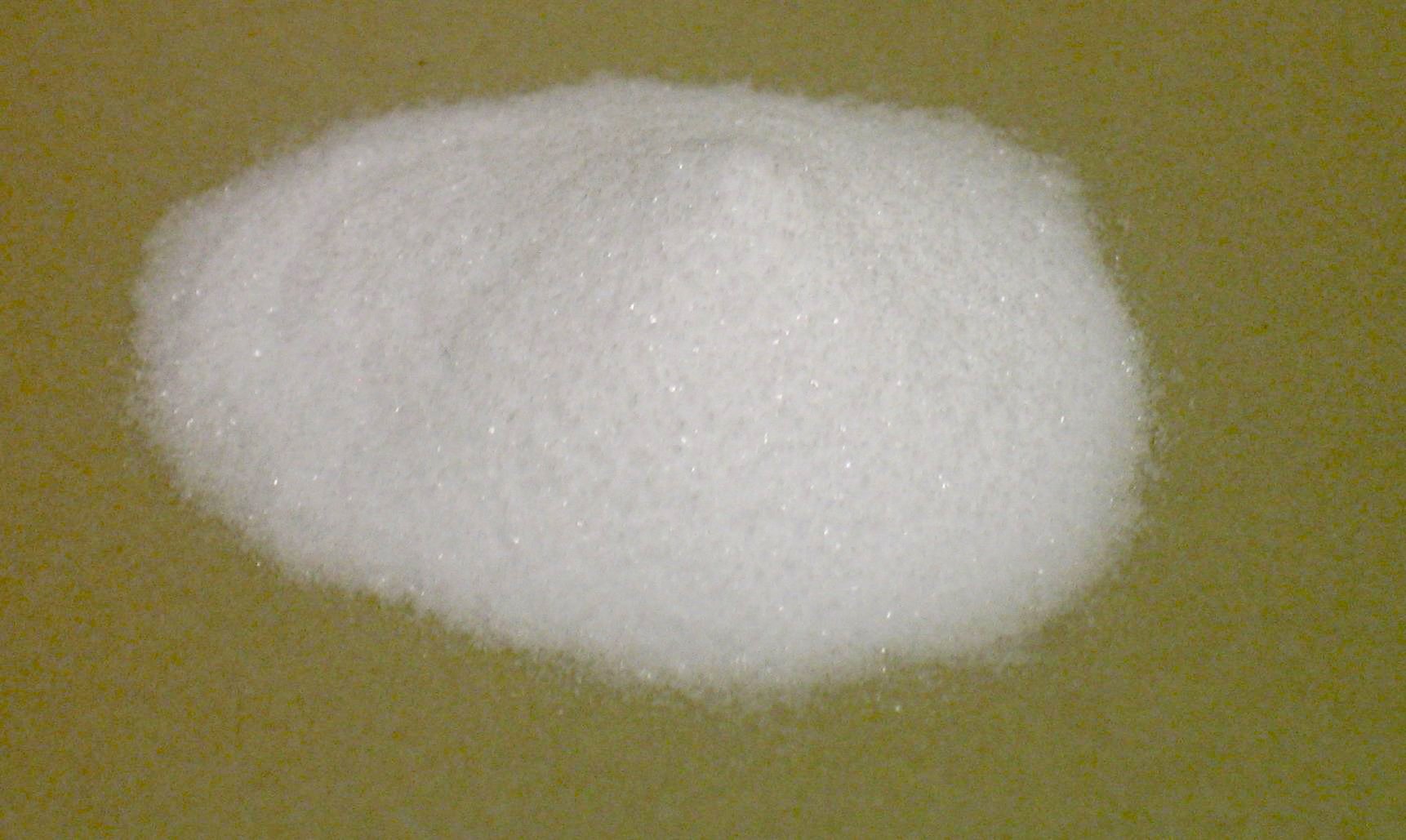
Sodium bicarbonate. Source: Wikimedia Commons (Public Domain)
In refrigerators, an open box or dish of baking soda reduces cross-contamination of odours between different food items stored together. This effect is well established and is the basis for a longstanding household practice. The material should be replaced every one to three months as the bicarbonate gradually reacts and becomes less effective.
Application on Surfaces
For carpets and upholstery, baking soda can be applied dry, left for fifteen to thirty minutes to allow contact with odour-producing compounds in the fibres, and then vacuumed up. This method is commonly used after pet accidents or to reduce general musty odour in carpets that have absorbed moisture during Canadian winters when wet boots are tracked in regularly.
Limitations of Baking Soda
Baking soda does not work on all odour types. Basic (alkaline) odour compounds — such as certain fish-derived amines at higher concentrations — are not neutralised by another basic substance. In those cases, a mildly acidic medium such as white vinegar is more appropriate. The two should not be combined simultaneously, as they react with each other rather than with the odour compound.
Lavender: Aromatic Modulation
Lavender operates through a different principle than baking soda. Rather than neutralising odour compounds, dried lavender flowers or lavender essential oil introduce a dominant aromatic compound — primarily linalool and linalyl acetate — into the surrounding air. These molecules occupy the same olfactory perception pathways as odour compounds and, at sufficient concentration, shift perception away from less desirable smells.
This is not the same as neutralisation. The underlying odour compound is still present. The practical effect is nonetheless useful in applications such as linen storage, clothing drawers and wardrobes, where a persistent low-level aroma is desirable and the primary odour concern is mustiness from stored fabrics.

Lavender flowers. Source: Wikimedia Commons (CC BY 4.0)
Dried lavender sachets are commonly used in Canadian homes in bedroom linen closets and wardrobe spaces. The aromatic compounds dissipate over several months; effective sachets are typically replaced or refreshed seasonally. Lavender oil on a small fabric pad or clay disc placed in a drawer or cupboard has a similar effect and can be re-applied when the intensity diminishes.
Canadian Lavender Cultivation
Lavender is grown commercially in British Columbia's Okanagan Valley and in parts of Ontario's Prince Edward County. Domestic dried lavender from these regions is available through farmers' markets and specialty food and garden stores across the country, providing a locally sourced option for households that prefer it.
Cedar: Aromatic and Mild Antimicrobial Properties
Cedar wood — particularly eastern red cedar (Juniperus virginiana) and western red cedar (Thuja plicata), both native to North America — releases volatile compounds including cedrol and thujopsene. These compounds contribute the characteristic cedar scent and have mild antimicrobial properties at higher concentrations in enclosed spaces, which may reduce some of the bacterial activity that generates odours in stored textiles.
Cedar closet liners and cedar blocks in drawers or wardrobes are a traditional and still-common practice in Canadian households. The practical effect is similar to lavender sachets in mechanism: the aromatic compounds modulate odour perception and help keep enclosed spaces smelling clean.
Cedar's aromatic output diminishes as the surface dries. Lightly sanding cedar blocks or boards with fine sandpaper (around 120 grit) exposes fresh wood and restores the release of volatile compounds. This can extend the useful lifespan of cedar products considerably.
Cedar is one of the few aromatic materials that is genuinely biogenic to the Canadian landscape. Western red cedar is native to the Pacific coast and the interior wet belt of British Columbia; eastern red cedar ranges from the Maritimes through Ontario and Quebec.
Comparing the Three Approaches
The three materials address different aspects of indoor odour:
- Baking soda chemically neutralises acidic odour compounds on contact. It is most effective applied directly to odour-producing surfaces.
- Lavender displaces odour perception through aromatic dominance. It is most useful in enclosed textile storage areas where a persistent scent is acceptable.
- Cedar provides both aromatic modulation and mild surface-level antimicrobial activity. It is most effective in wardrobe and drawer storage and requires periodic maintenance to remain active.
None of the three replaces source remediation or ventilation as primary methods when odour is severe or structural. They are complementary tools, most effective when odours are moderate and the underlying cause is manageable — food storage, textile storage, or general indoor accumulation during winter months.
References