Adsorption: The Underlying Mechanism
Both activated charcoal and zeolite work through adsorption — a surface-level process in which molecules from the surrounding air bind to the surface of the sorbent material without a chemical reaction occurring. This is distinct from absorption, where a substance is taken into the bulk of another material.
The effectiveness of adsorption depends primarily on surface area. A gram of activated charcoal, when processed to maximise its internal pore structure, presents a surface area that can exceed 1,000 square metres — far greater than the same mass of a non-porous material. Odour molecules passing near this surface encounter a large number of binding sites and attach to them. The material gradually saturates over time as available sites are occupied.
Temperature affects adsorption efficiency. Higher temperatures reduce the binding strength of adsorbed molecules, which is why charcoal bags placed near a heat source may re-release previously captured compounds. In Canadian homes, this is most relevant in spaces adjacent to heating vents or in vehicles during summer months.
Activated Charcoal in Residential Use
Activated charcoal is produced by heating carbon-rich materials — typically coconut shells, bamboo or wood — in a low-oxygen environment, then treating them with steam or chemical agents to open and expand their internal pore structure. The result is a highly porous solid with a black, granular or powdered appearance.
In residential applications, activated charcoal is typically sold in breathable fabric bags that allow ambient air to circulate through the material. These bags are placed in areas where odours concentrate: inside shoe storage areas, in refrigerators, under sinks, in car interiors or in closets. The material captures VOCs, moisture and some ammonia compounds from pet waste smells.
Charcoal Bag Lifespan and Regeneration
Activated charcoal bags marketed for household use typically indicate a functional lifespan of one to two years, after which the material is saturated and no longer effective. Some manufacturers recommend periodic regeneration by placing bags in direct sunlight for several hours — the UV energy and heat release adsorbed molecules and partially restore binding capacity. The effectiveness of this regeneration method varies and has not been uniformly validated in independent testing.
Activated charcoal does not neutralise all odour types equally. It is most effective at capturing mid-weight organic molecules. It has limited effectiveness against some low-molecular-weight compounds such as formaldehyde, which requires specifically treated (impregnated) charcoal rather than standard activated charcoal. This distinction is often not reflected in product labelling.
Zeolite: A Mineral Sorbent
Zeolite is a group of naturally occurring aluminosilicate minerals with a crystalline, highly porous structure. The most commonly used variety for indoor air applications is clinoptilolite, found in significant deposits in western Canada, the United States and several other regions. It is also produced synthetically for industrial applications.
The pore structure of zeolite is more geometrically regular than that of activated charcoal. This gives zeolite a degree of selectivity: its uniform pore size tends to capture molecules within a certain size range more readily than others. Zeolite is particularly effective at trapping ammonia and ammonium-based compounds — the primary odour source in animal waste and litter.
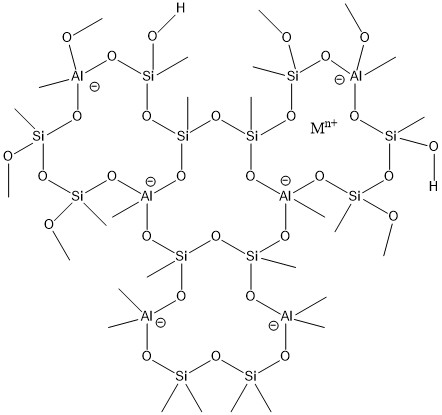
Structural diagram of zeolite. Source: Wikimedia Commons (CC BY-SA 4.0)
In practical household use, zeolite is sold as granules or powder, often in pouches similar to activated charcoal bags. It is also used as a component in cat litter and in some commercial odour-control products for basements and storage areas.
Unlike activated charcoal, zeolite can typically be regenerated more reliably by heating. Placing zeolite in an oven at temperatures around 200°C for one to two hours drives off adsorbed molecules and restores most of the material's original capacity. This cycle can be repeated multiple times, extending the functional lifespan of the material considerably.
Placement Considerations in Canadian Homes
Sorbents work at the room scale, not the whole-house scale. A single bag of activated charcoal in a bedroom closet will not address odours in adjacent rooms. Placement should be close to the odour source and in a location with moderate air circulation — not sealed inside a drawer or storage bin where air movement is minimal.
In Canadian homes, common high-odour locations where sorbents are useful include:
- Mudrooms and boot storage areas, where wet footwear accumulates during winter months and produces mould and mildew odour as it dries.
- Refrigerators and freezers, where a small charcoal unit in the back reduces cross-contamination of food odours.
- Basement utility rooms, particularly if a pet litter area or laundry zone is present.
- Vehicle interiors during winter, when windows remain closed and moisture from occupants condenses on upholstery.
- Inside storage closets that hold seasonal gear such as hockey equipment or gardening clothing.
Limitations and Complementary Methods
Sorbents address airborne odour compounds after they have been released into the air. They do not eliminate the odour source. A drain emitting sewer gas, a pet accident on carpet fibres or mould growth behind a wall will continue to generate compounds regardless of how much charcoal is placed in the vicinity. In these cases, source remediation — cleaning, sealing, or removing the cause — is the primary intervention, with sorbents playing a secondary role during and after that process.
Ventilation and sorbents complement each other. Ventilation removes air volume from the space and introduces fresh air; sorbents capture residual compounds in air that remains. In a well-ventilated Canadian home with an operating HRV, sorbents are most useful in specific enclosed areas — closets, vehicles, refrigerators — where air exchange does not occur.
References
